
how-do-nonmarking-suction-cups-achieve-tracefree-adsorption, how-do-nonmarking-suction-cups-achieve-tracefree-adsorption, /news
EN
2026/09/08
Non-marking suction cups represent a significant advancement in surface contact technology, designed specifically to hold materials without leaving permanent marks, stains, or damage. Whether used in manufacturing, construction, glass handling, or delicate material processing, these specialized non-marking suction cups solve a critical problem: how to secure items temporarily while preserving their original appearance and integrity. Understanding the engineering behind non-marking suction cups and their trace-free adsorption capability reveals why they have become indispensable across numerous industrial sectors.
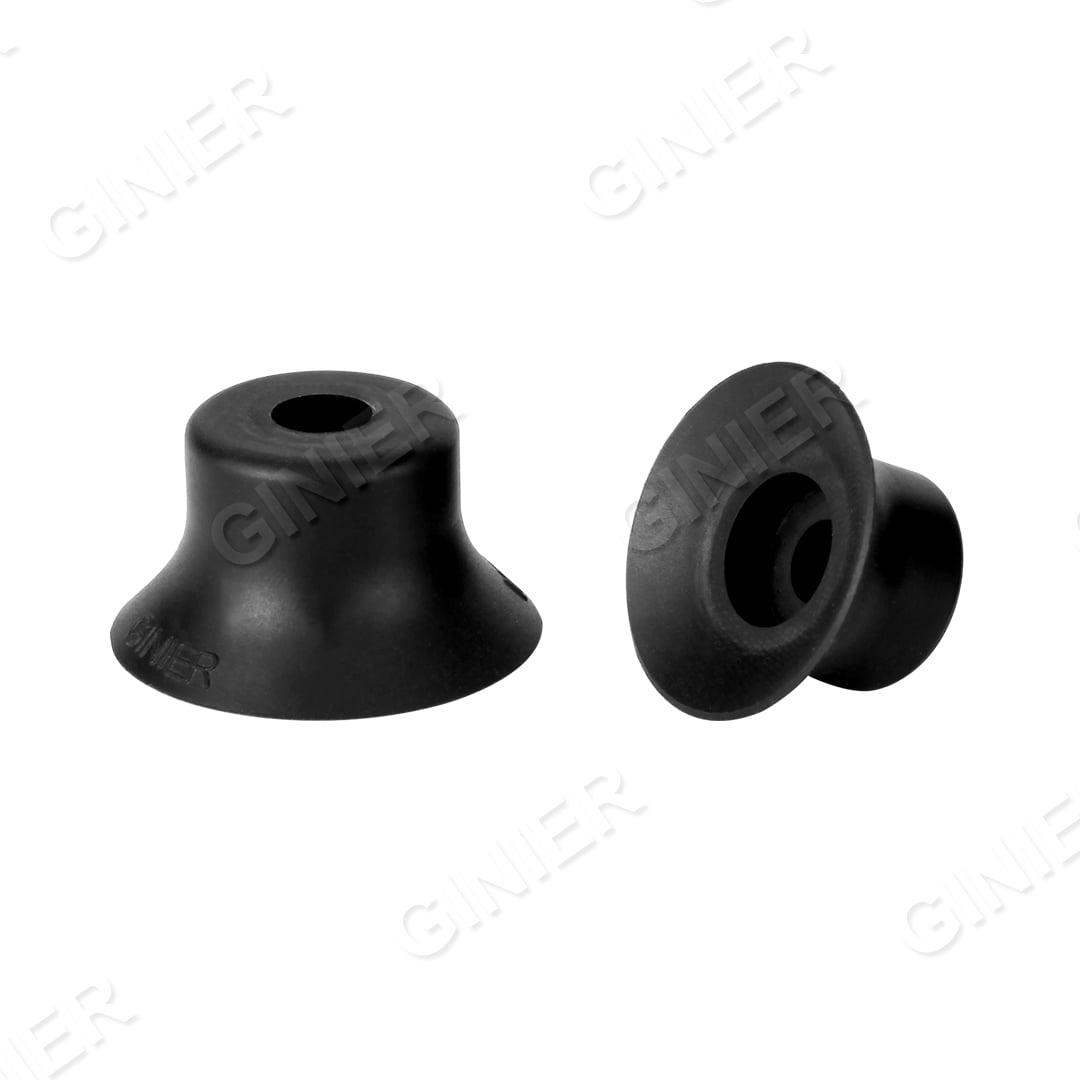
The fundamental question facing engineers and facility managers is straightforward: how do non-marking suction cups achieve trace-free adsorption when traditional suction cups often leave visible marks, rubber residue, or surface scratches? The answer lies in material selection, surface geometry, pressure distribution, and the chemical compatibility between the cup and the contacted surface. Non-marking suction cups employ proprietary formulations and design principles that create secure adhesion while maintaining complete reversibility—leaving no trace behind once the cup is removed.
Non-marking suction cups achieve trace-free adsorption through the use of premium elastomer compounds that differ fundamentally from standard rubber formulations. These non-marking suction cups utilize silicone-based or polyurethane-based materials engineered to resist staining, degradation, and adhesion to target surfaces. The molecular structure of these materials prevents migration of colorants, plasticizers, or hardening agents into the substrate being held. When non-marking suction cups contact painted surfaces, glass, wood, or coated metals, the elastomer maintains its integrity without transferring residue or creating chemical bonds that would require abrasive removal.
The contact surface of non-marking suction cups is precisely engineered to minimize friction and stress concentration on the substrate. Non-marking suction cups often feature smooth, rounded contact geometries that distribute pressure evenly across the held surface. This uniform pressure distribution characteristic of non-marking suction cups prevents localized stress points that could cause visible marks or micro-scratches. Advanced manufacturing processes ensure that every non-marking suction cups unit maintains consistent surface quality, eliminating microscopic imperfections that might otherwise scratch delicate finishes or leave impression marks on softer materials.
Non-marking suction cups achieve trace-free adsorption through precision-engineered internal chamber geometry that optimizes vacuum force application. The chamber design of non-marking suction cups distributes holding force uniformly across the contact surface rather than concentrating pressure at specific points. This engineering principle means non-marking suction cups create stable adhesion through gentle, distributed contact rather than aggressive clamping. The internal ribs, air flow channels, and thickness variations in non-marking suction cups work together to maintain consistent pressure zones, preventing the deformation marks that traditional suction cups often leave on contact surfaces.
The elasticity of non-marking suction cups is carefully calibrated to provide just enough compliance to conform to irregular surface textures without excessive deformation. This controlled compliance allows non-marking suction cups to achieve reliable adhesion on textured, curved, or slightly uneven surfaces without creating permanent compression marks. When non-marking suction cups conform to the substrate surface, they do so gradually and uniformly, distributing contact forces across a larger area. This gradual compliance behavior distinguishes non-marking suction cups from rigid or overly stiff alternatives that concentrate force at contact edges and create visible indentations or ring marks.
Non-marking suction cups maintain trace-free adsorption through formulation chemistry that prevents interaction with common surface coatings and finishes. Traditional suction cups may contain sulfur compounds, UV stabilizers, or plasticity agents that can stain or interact chemically with certain surfaces, but non-marking suction cups are formulated to remain inert. The materials used in non-marking suction cups resist oxidation and discoloration, preventing browning or yellowing marks that sometimes appear after prolonged contact. Testing protocols for non-marking suction cups specifically measure colorant transfer, stain formation, and chemical migration to ensure complete compatibility across diverse material types including lacquered wood, polished metals, painted surfaces, and glass.
The adsorption achieved by non-marking suction cups is fundamentally reversible because the contact mechanism relies on mechanical vacuum force rather than adhesive chemistry. Non-marking suction cups create holding power through pressure differential without chemical bonding or mechanical interlocking with the substrate surface. This reversible nature of non-marking suction cups ensures that removal leaves no permanent changes to the contacted surface. The vacuum force of non-marking suction cups can be released instantly without residual adhesive, hardened material, or surface damage, making them ideal for precision applications where material preservation is critical to product value or functionality.
Non-marking suction cups deliver trace-free adsorption benefits across diverse industrial applications where surface protection determines product quality. In glass manufacturing and architectural glass handling, non-marking suction cups prevent the edge marking and surface contamination that reduce product grade classification. For automotive body panel processing, non-marking suction cups maintain painted surface integrity during handling and positioning operations. In electronics manufacturing, non-marking suction cups handle sensitive coatings without creating blemishes that would trigger quality rejections. Mirror production, photovoltaic panel assembly, and precision coating operations all depend on non-marking suction cups to maintain zero-defect surface standards throughout material transport and processing workflows.
Manufacturers of non-marking suction cups implement rigorous testing protocols to verify trace-free performance before deployment. Contact time studies measure stain formation across different surface types and durations, confirming that non-marking suction cups leave no visible marks even after extended holding periods. Migration testing analyzes whether any residue transfers from non-marking suction cups to substrates, ensuring chemical inertness under operational conditions. Pressure mapping studies validate that non-marking suction cups distribute holding force uniformly without creating stress concentration zones. These quality assurance measures ensure that every unit of non-marking suction cups performs consistently, delivering the trace-free adsorption reliability that industrial users demand for high-value materials and quality-sensitive processes.
Non-marking suction cups are engineered to maintain extended contact without surface marking under normal operational conditions. Extended contact testing typically shows that non-marking suction cups create no visible marks or residue even after several hours of continuous holding on most surfaces. However, contact duration depends on specific surface type, ambient temperature, and material compatibility. For maximum assurance, manufacturers provide material-specific compatibility data indicating safe contact windows for non-marking suction cups on particular substrates, ensuring users can optimize holding time while maintaining zero-defect trace-free performance.
While non-marking suction cups offer superior trace-free properties, their performance depends on surface characteristics and material compatibility. Non-marking suction cups perform optimally on smooth, non-porous surfaces including glass, polished metals, coated panels, and painted materials. Highly textured surfaces, unsealed wood, or porous materials may reduce the effectiveness of non-marking suction cups due to reduced contact area and potential material absorption. Manufacturers typically provide detailed compatibility guides specifying which surface types work best with non-marking suction cups, allowing users to make informed material selection decisions before deployment on critical applications.
Non-marking suction cups require minimal maintenance to preserve their trace-free performance throughout operational life. Regular cleaning with non-abrasive, lint-free cloths removes dust and debris that might accumulate on the contact surface of non-marking suction cups. Users should avoid harsh solvents or aggressive scrubbing that could damage the elastomer, instead using mild soap and water for contaminated non-marking suction cups. Proper storage in cool, dry conditions protects non-marking suction cups from UV exposure and ozone degradation that could compromise material properties. With basic care, non-marking suction cups maintain consistent trace-free adsorption capability across extended service periods, delivering reliable performance for demanding industrial applications.
Explore our core 3 major vacuum product series for automated handling solutions.
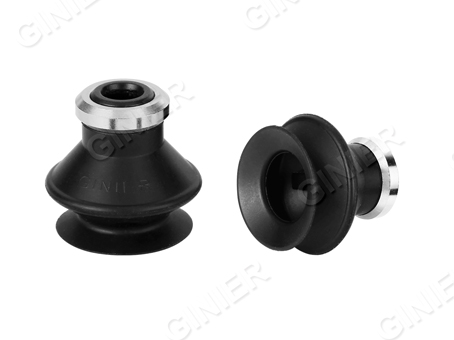
Full-range suction cup series with diversified materials & sizes.
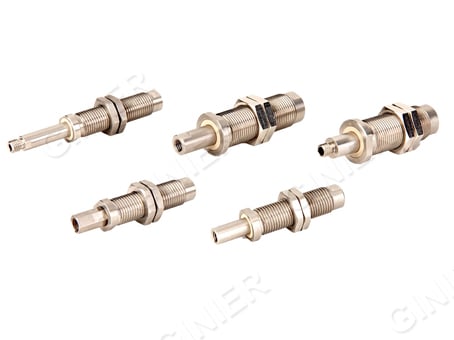
Complete pre-assembled suction fitting product lineup.
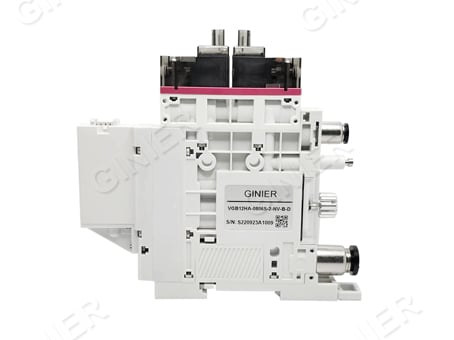
Modular vacuum generator full product portfolio.
 EN
EN