
can-vacuum-ejectors-handle-highspeed-pick-and-place, can-vacuum-ejectors-handle-highspeed-pick-and-place, /news
EN
2026/08/21
High-speed pick and place automation demands precision, reliability, and consistent performance across thousands of cycles per hour. A vacuum ejector is a pneumatic device that generates vacuum by converting compressed air into a lower pressure state, making it essential for lifting and positioning lightweight components in automated assembly lines. The critical question many manufacturing engineers face is whether a vacuum ejector can actually keep pace with the demands of high-speed production environments without sacrificing cycle time or part quality.
The short answer is yes, but with important caveats. Modern vacuum ejector technology has evolved to meet the speed requirements of contemporary automation systems. Understanding the performance characteristics, limitations, and optimization strategies of a vacuum ejector is essential for engineers designing or upgrading high-speed pick and place systems. This article explores whether a vacuum ejector can truly deliver the speed and reliability that modern manufacturing demands, and what factors determine success in your specific application.
A vacuum ejector generates vacuum almost instantaneously when supplied with compressed air, typically achieving operational vacuum levels within 50 to 150 milliseconds depending on the design and air supply pressure. In high-speed pick and place applications where cycle times may be as short as 0.5 to 2 seconds, this response time is negligible. The vacuum ejector operates on a simple principle: pressurized air passes through an internal nozzle creating a low-pressure zone that draws in ambient air, thereby establishing vacuum at the suction port. This pneumatic mechanism is inherently fast, with no moving parts to slow the vacuum generation process.
Maintaining consistent vacuum levels throughout the pick, transport, and place phases of each cycle is critical for reliable part handling. A well-designed vacuum ejector delivers stable vacuum output once steady-state conditions are reached, typically within the first 200 milliseconds of operation. For high-speed pick and place, this stability is important because fluctuating vacuum levels can cause parts to slip or fall during transport. The vacuum ejector's performance depends heavily on stable compressed air supply and proper supply line sizing to prevent pressure drops that would compromise the vacuum level during rapid sequential cycles.
The size of the vacuum ejector directly influences its speed capability in high-speed pick and place environments. Smaller vacuum ejector models are typically faster at achieving vacuum but may have lower flow capacity, limiting them to lighter loads or smaller part counts per cycle. Larger vacuum ejector units can handle greater part weights and higher flow demands but may take slightly longer to establish vacuum. Selecting the correct vacuum ejector size requires balancing the number of suction cups, part weight, cycle time requirements, and the compressed air supply capacity. For truly high-speed applications, engineers often use multiple smaller vacuum ejector units distributed across the gripper rather than one centralized unit.
A vacuum ejector relies on clean, dry, regulated compressed air to function optimally at high speeds. Supply pressure between 80 and 100 PSI is typical for industrial applications, with higher pressures generally producing faster vacuum generation. However, a vacuum ejector can only perform as well as the compressed air supply feeding it. Moisture, oil droplets, or particulate contamination can degrade the vacuum ejector's internal components, leading to performance degradation and unexpected failures during production runs. Proper air filtration, drying, and regulation upstream of the vacuum ejector are non-negotiable for sustained high-speed operation.
The vacuum ejector is only one component of a complete high-speed pick and place system. The suction lines connecting the vacuum ejector to the gripper cups must be sized appropriately to minimize pressure drop and vacuum response delay. Undersized tubing or excessive line length can slow the vacuum ejector's effective performance, adding unnecessary milliseconds to each cycle. Modern high-speed pick and place systems use short, large-diameter vacuum lines and position the vacuum ejector as close as possible to the gripper to maximize response time. A vacuum ejector integrated directly into the gripper assembly performs noticeably faster than one mounted remotely with long connecting hoses.
The weight, surface finish, and geometry of parts being picked influence whether a given vacuum ejector is truly adequate for high-speed operation. Lightweight plastic or composite parts require less vacuum flow, allowing the vacuum ejector to establish holding force quickly. Heavier parts or parts with irregular surfaces may demand higher vacuum levels or larger flow capacity, which can slow the vacuum ejector's response relative to very light part applications. Testing the vacuum ejector's performance with actual production parts at intended cycle speeds is essential before committing to a full deployment in a high-speed pick and place line.
A vacuum ejector typically generates usable vacuum levels within 50 to 150 milliseconds when supplied with regulated compressed air. For most high-speed pick and place operations with cycle times measured in seconds, this response is effectively instantaneous. The vacuum ejector's speed advantage over electric pumps is one reason pneumatic vacuum ejectors remain popular in fast-paced automation environments.
Yes, a vacuum ejector operates without moving parts or friction-based heating mechanisms, making it inherently capable of continuous duty cycles. The vacuum ejector converts compressed air into vacuum through a venturi or nozzle design, generating only minimal heat. Even in 24/7 high-speed pick and place production, a properly sized and supplied vacuum ejector will not overheat, unlike motor-driven vacuum pumps which can accumulate thermal stress during continuous operation.
The correct size of a vacuum ejector depends on total part weight, number of suction cups, required vacuum level, and cycle time. A general rule is to select a vacuum ejector with flow capacity 20 to 30 percent above your calculated peak demand to ensure adequate response speed. Consulting vacuum ejector performance curves and flow ratings provided by manufacturers, matched against your specific gripper configuration and cycle requirements, will identify the optimal vacuum ejector size for your high-speed application.
Explore our core 3 major vacuum product series for automated handling solutions.
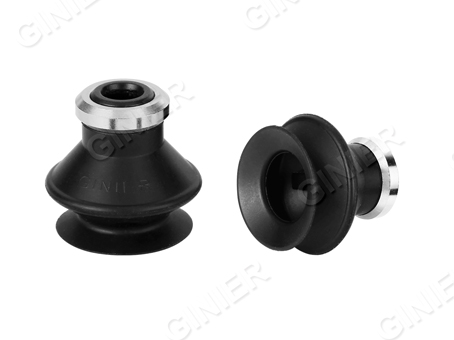
Full-range suction cup series with diversified materials & sizes.
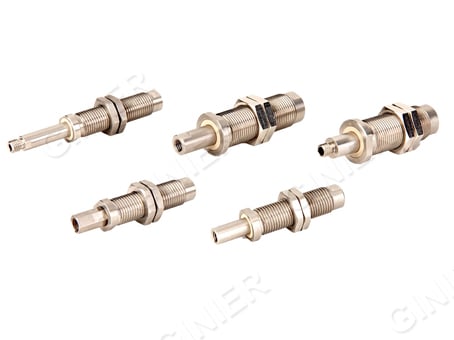
Complete pre-assembled suction fitting product lineup.
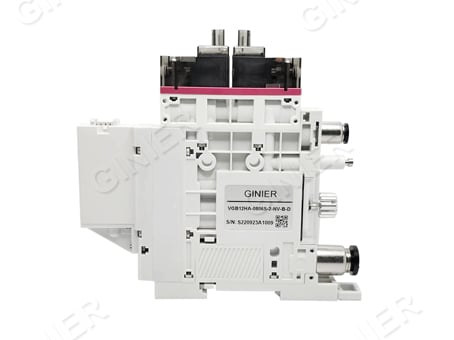
Modular vacuum generator full product portfolio.
 EN
EN